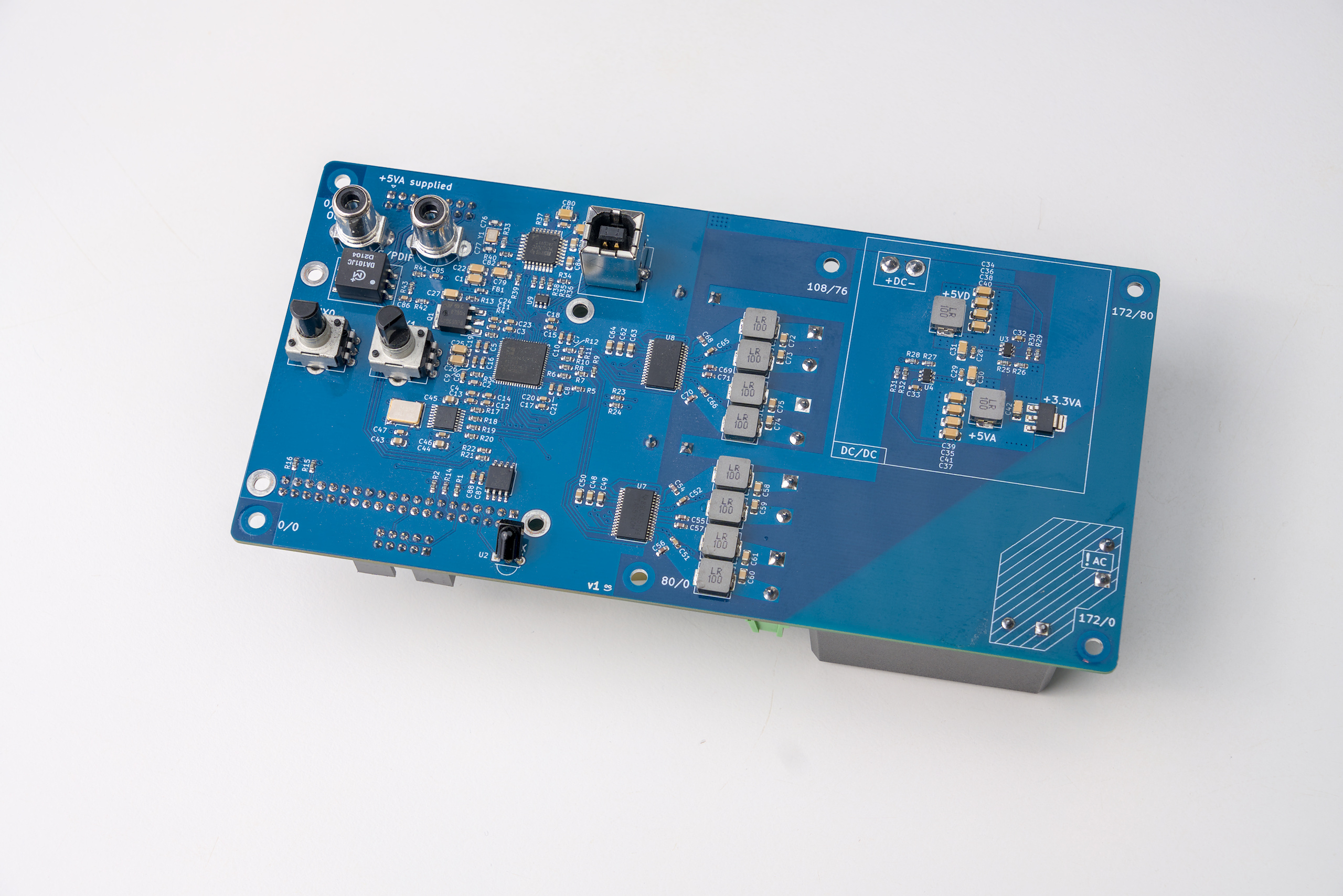
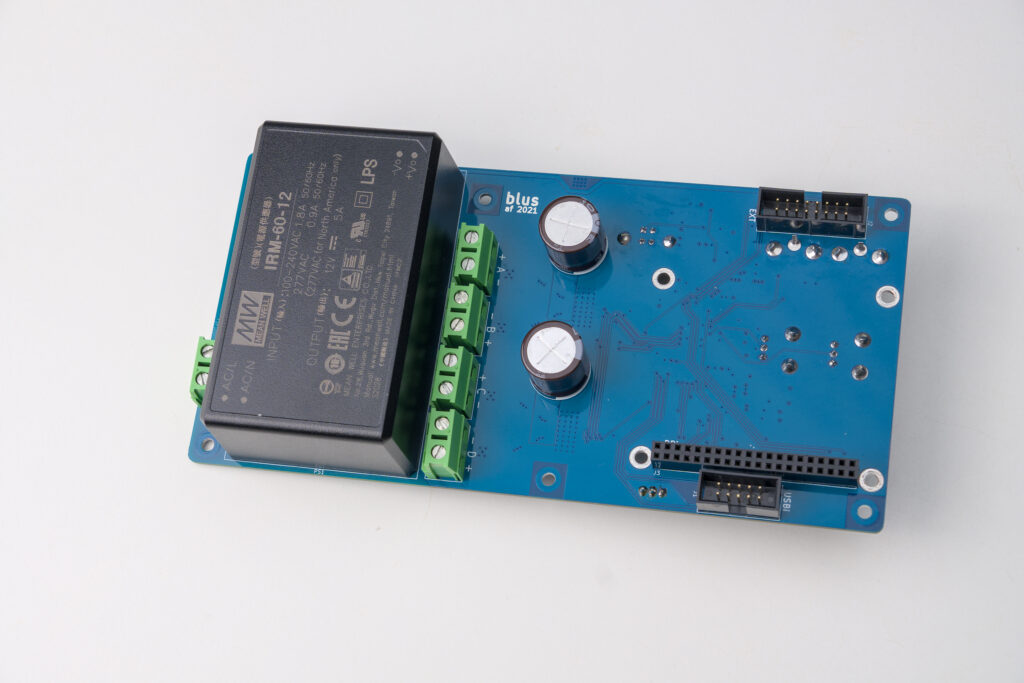
This is a four-channel Class-D amplifier based on the popular Analog Devices ADAU1452 DSP. While commercial plate amplifiers exist, they can be very expensive and often lack versatile digital inputs or flexible control. Blus combines high-quality Class-D amplification with flexible input options, digital control, and a more accessible design.
All the design files are available on github.com/blus-audio.
Hardware
To keep the board bring-up and potential software design simple, Blus was designed around the off-the-shelf Analog Devices ADAU145x family. No programming is required to get it up and running—instead, SigmaStudio is used for configuring this series of DSPs in a graphical way.
On top of that, the development of the Blus amplifier targeted the following features:
- USB audio input, using the Texas Instruments PCM2706 USB audio bridge with I2S output
- RaspberryPi audio input over I2S
- External I2S input and output for add-on boards (e.g. TOSLINK)
- S/PDIF input and passthrough
- Four-channel audio, powered by two Class-D amplifiers, the Texas Instruments TAS5760M
Software
While programming the DSP is possible via an external debug interface on the PCB, my goal was to be able to configure the device remotely. So, I designed the system in such a way that a RaspberryPi can interface to the DSP via SPI and can control it.
In order to accomplish that, I developed a Python bridge service that exposes a TCP server. Then, SigmaStudio can connect to it, and send configuration messages. The service interprets messages and forwards them to the DSP. Find the source code and documentation in the sigmadsp repository.
This software is also freely available on PyPi if you want to give it a try. I added support for additional DSP families beyond the ADAU145x.